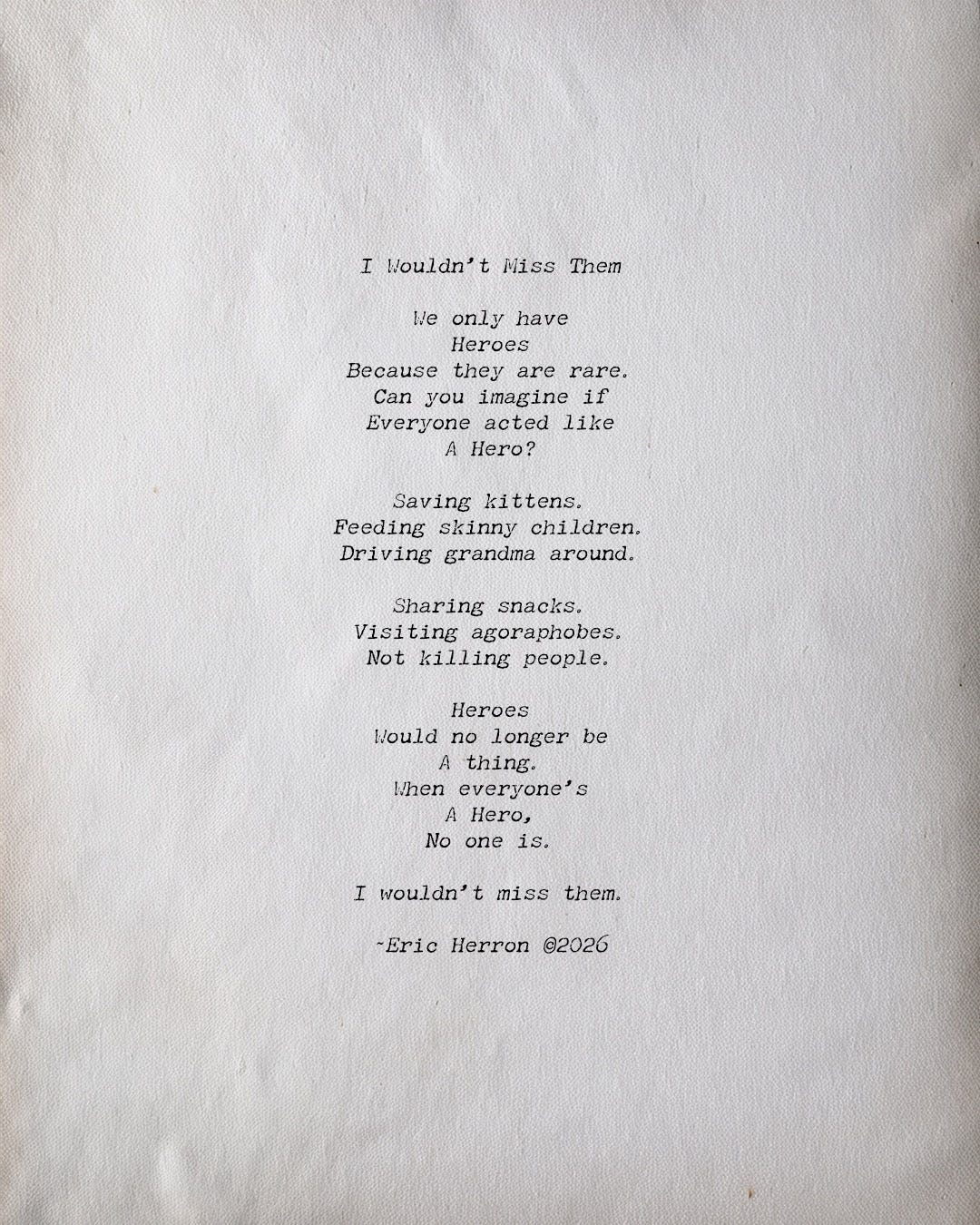
We Don't Need Another Hero
(Unless It's You)

If you like what you find here, please tap the ❤️ icon and subscribe. More about me, here.
“We don’t need another hero!” Tina Turner famously sang in 1985 for the soundtrack of Mad Max 3: Beyond Thunderdome. It’s kind of a lame song, except for the hook, which I could sing all day long and which has been stuck in my head since I heard the accusations of rape and sexual assault against Cesar Chavez.
While Turner was singing about Mel Gibson’s ersatz hero, I’ve been targeting my sung sentiment at humanity’s generally misplaced faith in conventional champions.
Whether we’re talking about rights activists like Chavez, sports icons like Kobe Bryant, political leaders like Thomas Jefferson, or even Biblical giants like King David, none of them are worthy of the heaping adulation we pile on.
Nine Reasons Heroes Are Bad
To put it another way, I would argue that our admiration for certain public figures is actually harmful to our broader human potential. Here are some reasons I think conventional heroes do more harm than good…
Conventional Heroes Are Fake. Those people I listed earlier—and other popular public figures—do not actually possess any intrinsic “hero” qualities. They are regular humans, like you and me. The only reason they have become heroes is because we have created them, according to our image of what we think a hero should be.
Conventional Heroes Are Good at One Thing. And why would we elevate them? Generally, it’s because of one thing—and it could be one really great thing. Perhaps they fought for the rights of immigrant workers who could not fight for themselves. Or they were an NBA champion five times. Maybe they drafted the Declaration of Independence. Could be that they effectively led the ancient Israelites through some difficult times. But all of these “heroes” also had many other things they were not good at.
Conventional Heroes Are Flawed. To be honest, our heroes often amount to zeros if we sum up their pluses and minuses. Take, for instance, Thomas Jefferson. He was certainly one of the most important figures in the founding of the U.S. Let’s give him 100 points for that. However, Jefferson was also a life-long slave owner who held hundreds of human beings captive as his personal property. Let’s give him -100 for that. 100 - 100 = 0. This is not to say that he (or other conventional heroes) are worthless. Clearly not. But when you do the math, they are often not much different than anyone else.
Conventional Heroes Are Often Good at Unimportant Things. In the grand scheme of things, how important is it to be a five-time NBA champion? Basketball lovers will disagree, but I think we can make an objective argument that Kobe Bryant, for all his glorious athleticism, does not deserve an annual, albeit unofficial, holiday. Many celebrities, including actors and musicians, are celebrated with hero-like status for their entertaining skills. It is natural to appreciate them for those talents. Unfortunately, appreciation is usually not enough for us, so we raise athletes and others with relatively unimportant skills to god-like status.
Conventional Heroes Inspire Us to Like Them, Not to Actually Do Anything. Sometimes, when we create heroes of our entertainers, we are inspired. If we are an actress our self, the inspiration of a Meryl Streep can be powerful. Her persona may encourage us on our path to acting. But for most of us, we are not inspired to actually do what our so-called heroes do. Instead, we partake in a kind of passive awe and veneration that actually has a demotivating effect on us. The more we elevate those entertainers, the more separated they become from our reality. And the less we feel like we need to act as heroes ourselves.
Conventional Heroes Inspire Monuments That May Not Last. As a testament to his heroism, fifty or so cities in the U.S. have a street, a school, or some other monument named in honor of Cesar Chavez. What happens when serious allegations of sexual abuse by credible women are made? Having been the first state to make March 31st (Chavez’s birthday) an official state holiday in the year 2000, California was also the first to officially change the name of the holiday to “Farm Workers Day” (and that on March 26th, just four days before the 2026 celebration). Wouldn’t “Farm Workers Day” have been a better holiday name in the first place?
Conventional Heroes Ultimately Degrade Our Faith In Human Potential. When we believe that only a chosen few can do great things, we lose our faith in the great possibilities of the common woman and man. Greatness becomes an inaccessible realm. Actually, it’s probably more accurate to say that “greatness” takes on a rarefied definition that it was never meant to have—and so we believe it is inaccessible.
Conventional Heroes Devalue “Small” Acts By Default. I believe that checking on your elderly neighbor, speaking up for a timid one, shaking the hand of the smelly man who wanders the streets, spending time with the lonely kid… these are truly heroic acts. But the existence of conventional heroes and their over-the-top acts of greatness convince us that nothing we do could or should be worthy of a statue or a holiday.
Conventional Heroes become untouchably mythic the longer they are remembered. “David and Bathsheba” is a familiar story, but usually it’s the sanitized-for-seven-year-olds, Sunday School version that people know. According to the Bible, it’s the story of a powerful man, who uses his power to sexually assault and rape a woman, then kills her husband. And yet… King David remains an adored figure in Judeo-Christian history. I know what you’re thinking: grace, grace, grace… God forgives… David’s successes made up for his flaws… etc. On the contrary, I would suggest that David’s corruption sullied his later actions, even his writing of the Psalms. For example, I wonder if the Davidic/Psalmic sentiment of hatred toward one’s enemies that our “Secretary of War” is so fond of quoting in prayer, is less a by-product of the Spirit and more the natural negative heritage of David’s utter moral failures. And yet, the shadow of his heroic status grows through the ages, obscuring the shameful reality.
Heroes In the Making
We don’t need another conventional hero. They suck all the oxygen out of the room, leaving the rest of us gasping for air. And the real irony is, we are the ones who have elevated them to hero status in the first place!
Thankfully, there is a fairly simple solution to this problem: You and I, we must become heroes. Not in the conventional sense. No need to become a caped crusader, an award-winning athlete, lauded entertainer, king or queen, or president.
Our hero-narrative is simply to live out a good life using whatever abilities we’ve been given, loving people, and by doing so, loving God. If you are doing this, you are already a hero. If you are not yet, you at least have a hero’s potential.
Resist the hero’s holiday. Cheer for the champion once. Transparently acknowledge the leader’s flaws. Name your streets “Maple,” or “Vista,” or “Planet Parkway.”
If we choose this alternate approach, we’ll have a world full of authentic heroes. Can you even imagine it?
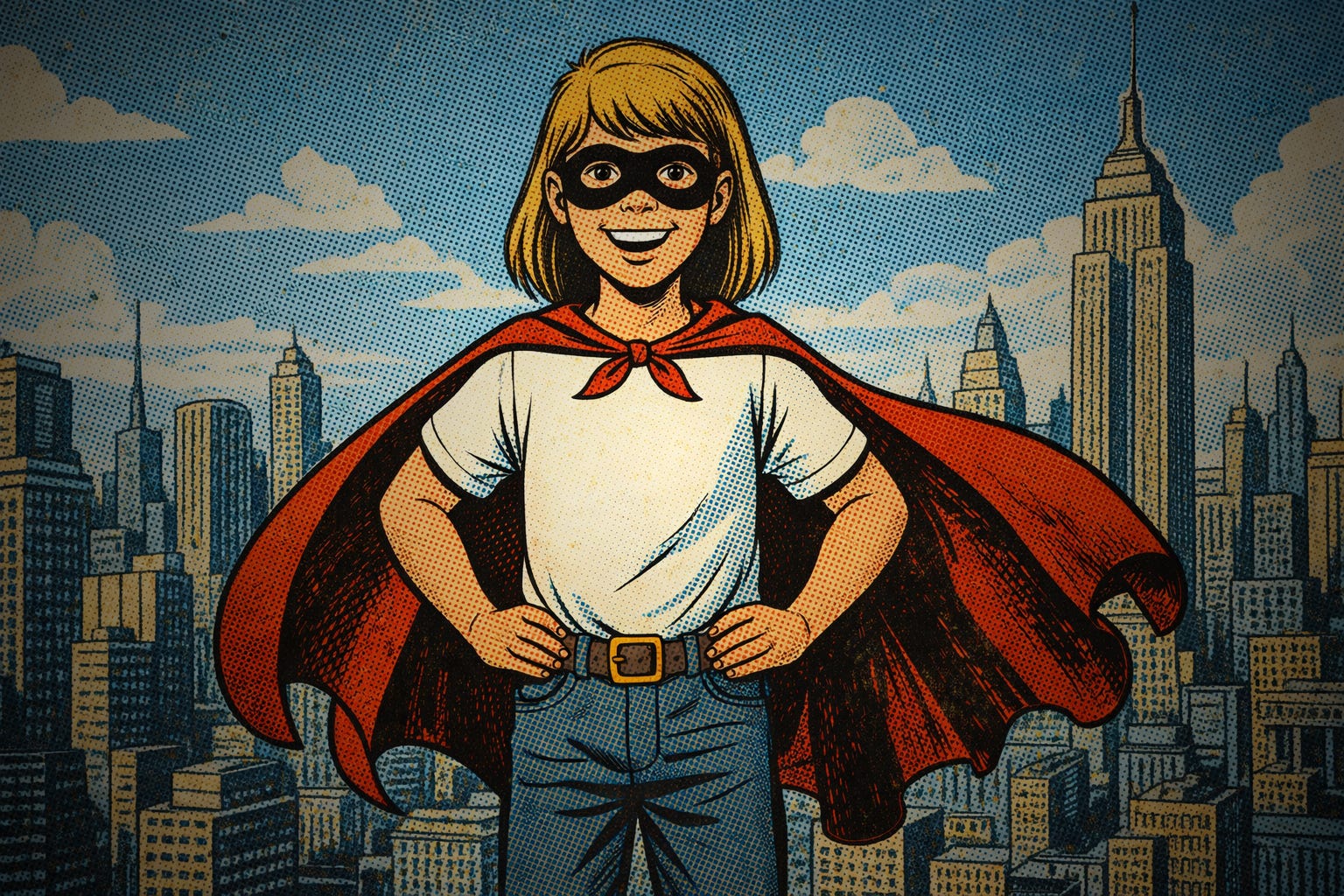
I WOULDN’T MISS THEM
(a Poem)
We only have
Heroes
Because they are rare.
Can you imagine if
Everyone acted like
A Hero?
Saving kittens.
Feeding skinny children.
Driving grandma around.
Sharing snacks.
Visiting agoraphobes.
Not killing people.
Heroes
Would no longer be
A thing.
When everyone’s
A Hero,
No one is.
I wouldn’t miss them.
~