

Jesus Can't Be the Answer...
... to Our American Problems


I had a realization this week. It’s something I already knew and have thought about before, but in the moment, it stuck me as particularly profound.
A missionary I used to work with shared a politically conservative post about the current events in Minnesota. The post he shared was from Armstrong Williams, who made a number of wild assertions, including the idea that the reason for the violence in Minneapolis is a direct result of the chaos being caused by the protestors, specifically because the protestors are somehow motivated by “power.”
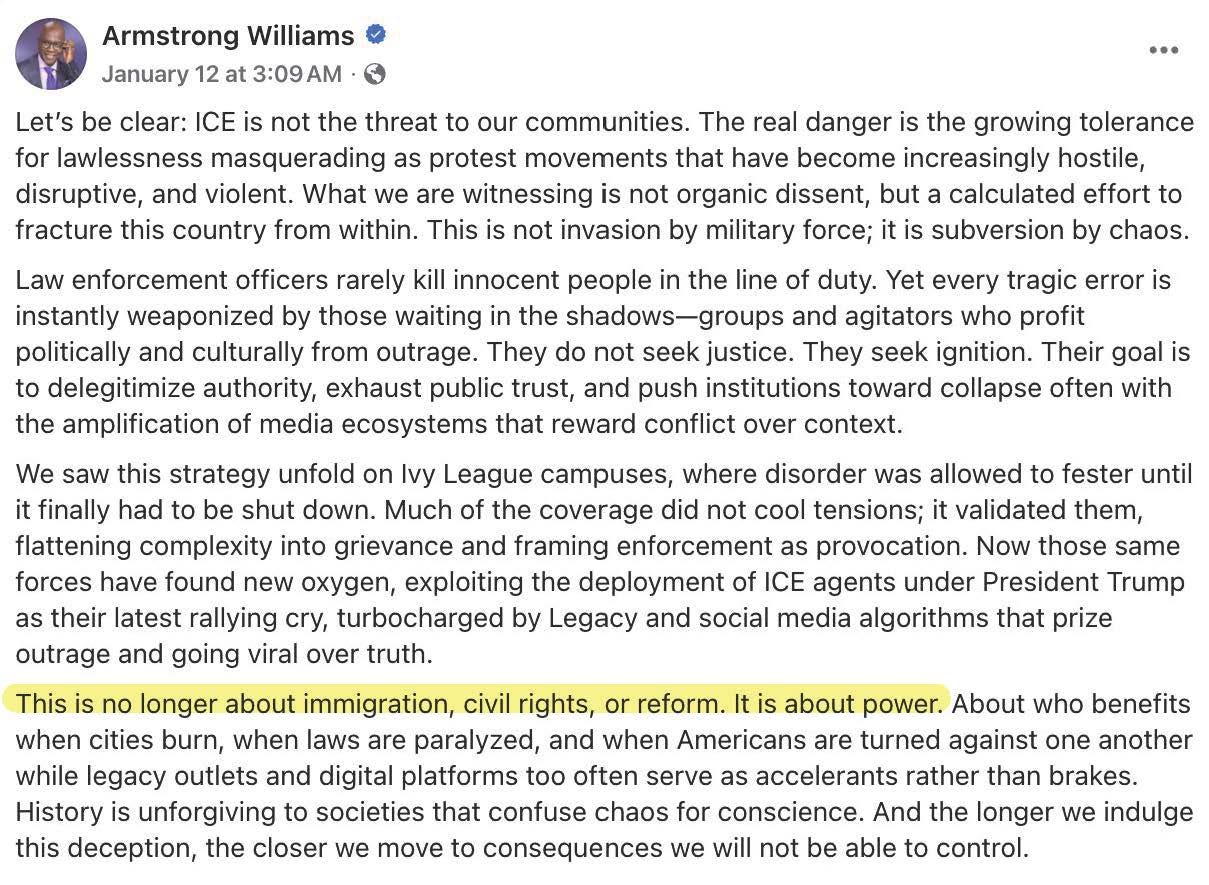
It’s laughable to me that you have men with guns and masks and military style uniforms, but the ones accused of being power hungry, are the grandmas holding signs and shouting for ICE to leave their neighborhood.
But anyway…
I don’t really want to get into all that. What struck me was less a political point than something related to religion and spirituality.
After we had exchanged some polite disagreements about the political situation, my missionary friend—who has written some Christian books, successfully trained many church leaders, and is a very kind and graceful man—concluded with these words:
“One thing we can agree on is how much we need Jesus in the midst.”
Immediately, a hearty “Yes!” began welling up in my soul. As the “Y-E-S” worked its way down my arms to my fingers and was about to initiate an affirmative tap-tap-tap on the keyboard, some cognitive dissonance announced itself in my psyche.
I paused. “Wait a second,” I thought, “which Jesus is he talking about?” As much as I consider my missionary friend a brother, I am also aware that we have some divergent views on the person and character of Jesus. If my Jesus and his Jesus are categorically different in some significant ways, then agreeing to have Jesus in our midst is not really a meaningful, is it? What exactly would we be agreeing to?
My fingers moved from “Y-E-S” on the keyboard to a bunch of other letters that spelled out the following:
“… I’m not sure we can even agree on that [needing Jesus in our midst]. I hate the thought, but I don’t think my Jesus looks like your Jesus. And my Jesus definitely doesn’t look like the Jesus represented by the cross that Karoline Leavitt [White House Press Secretary] wears around her neck.”
Another commenter responded right after this, declaring that “nobody owns Jesus”—and then went on to unwittingly hammer home my point by describing his, apparently indisputable, version of the Son of God.
And this is yet to say nothing of the diverse versions of Jesus that exist in the minds of millions of non-Christian Americans.
I suppose that despite our disagreements about the person of Jesus, we could still invite the Son of God to be in the midst of our troubled political situations. What could it hurt? If Jesus is real, couldn’t his presence benefit our American situation, even in spite of our good or bad ideas about who he really is?
Sadly, I still think the answer is no. It’s no because Jesus doesn’t show up hovering on a low cloud, poised to aim his charged finger at the violence to dispel it. In reality, Jesus shows up through real people.
And if Jesus shows up through real people, we’re back to that complication that people act on Jesus’ behalf out of their own understandings of who they believe the Son of God to be.
In fact, I wouldn’t be surprised if many of the ICE agents view their job as motivated and empowered by Jesus working in and through them. Conversely, there are certainly a large number of protestors who recognize Christ in them, pushing back against this governmental aggression and overreach.
Since I started writing this, protestors interrupted a church service in St. Paul on Sunday, January 18th, with the intent of informing the congregation that one of their pastors is the acting field office director for ICE enforcement and removal operations in their city.
Apparently, we don’t need to agree for it to be so. It appears “Jesus” is already in our midst. And it is not very helpful. One could even make an argument that this “presence of Jesus in our midst” is actually making things worse.
If Americans don’t agree who Jesus is, he can’t be the answer to our problems. The answer must lie elsewhere.
What do you think?
Eric, I sense that this is a far more important post than even you may realise. Especially the recognition that having "Jesus in the midst" makes things worse when we can't agree on who Jesus is. We all tend to create Jesus in our own image to some extent. And what we believe about Jesus often reveals more about us than it does about Jesus.
And so, as you rightly say, the answer to our problems - and not just those in the USA, but our problems globally - must lie elsewhere. But where that might be and how we can come to an agreement about it is equally challenging…
Thank you for a really challenging, truth-telling, and insightful post.